

When buyers walk into a home, they usually notice the obvious things first.
The kitchen.
The flooring.
The bathrooms.
The bedrooms.
The pool.
The view.
All of that matters.
But when Amy and I walk through a property with a buyer, we also pay attention to a different set of things.
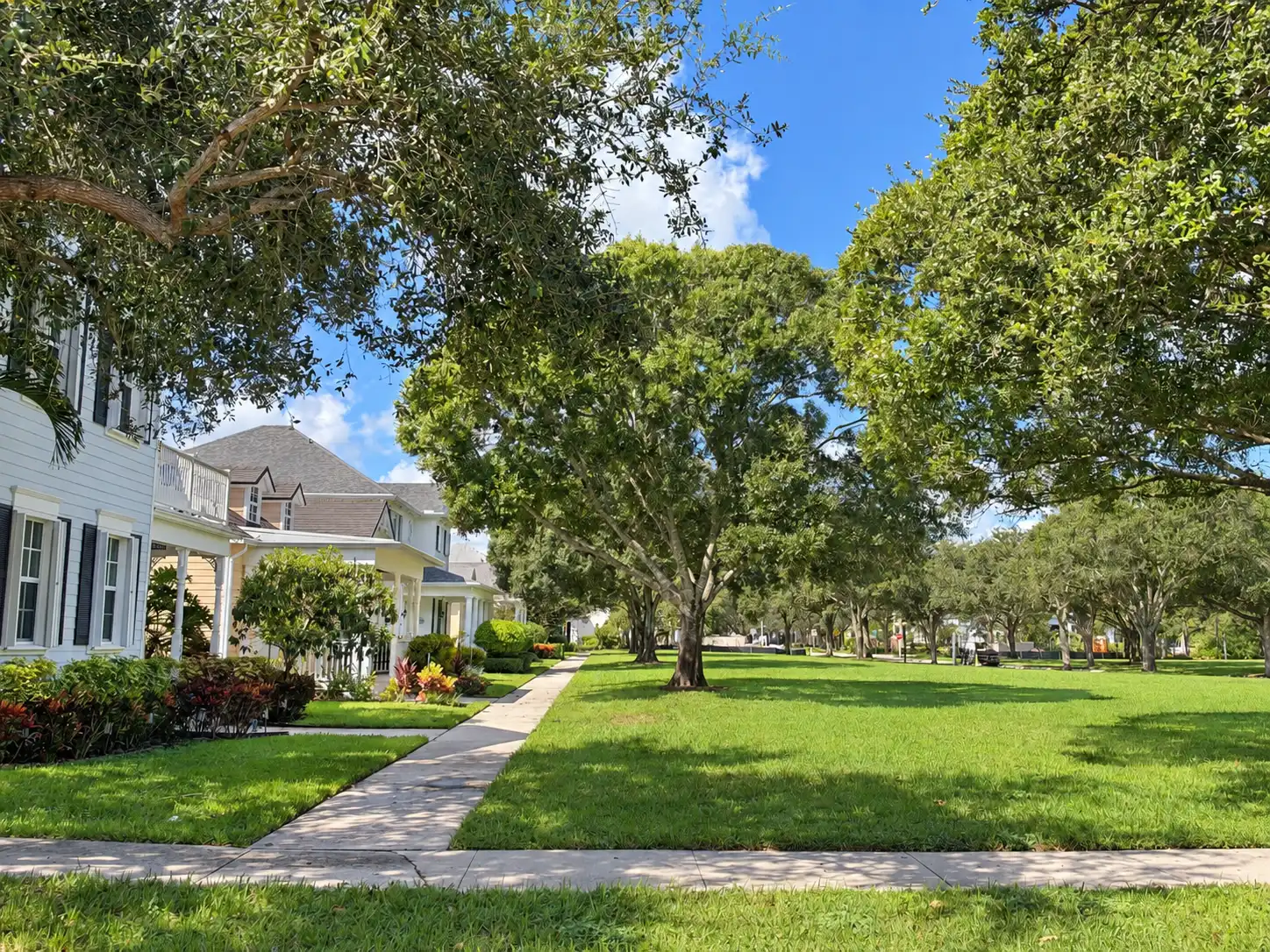
The street.
The lot position.
The neighboring homes.
The traffic pattern.
The exposure.
The parking.
The noise.
The community layout.
The distance to everyday destinations.
And depending on the property, we may also be looking at the exact golf hole, whether the view is golf, water, or both, how close the cart path is, or what may eventually be built nearby.
Because a kitchen can be changed.
Flooring can be replaced.
Bathrooms can be remodeled.
But the lot, the street, the view, and what surrounds the home are usually much harder to change.
That is why we always tell buyers:
Do not just buy the house. Pay attention to the setting.
The Street Matters More Than Buyers Think
A beautiful home can still sit on a street that doesn’t fit how you want to live.
We look at traffic.
Is the street quiet?
Is it a cut-through?
Is it close to the community entrance?
What is directly across from the home?
These things may seem small when you are focused on the kitchen or pool.
But you experience the street every day.
You notice it when you leave the driveway, when guests arrive, when you walk the dog, or when children are outside.
A street does not need to be perfect.
It just needs to fit your lifestyle.
Lot Position Can Completely Change the Experience
Two homes with the same floor plan can feel very different depending on where they sit.
A corner lot may feel more open.
A cul-de-sac may feel quieter.
A home near the entrance may be convenient but have more passing traffic.
A property farther inside the community may feel more private.
Some lots back to other homes.
Others back to water, golf, preserve, or open space.
The floor plan may be identical.
The experience may not be.
What Is Behind the House?
This is one of the first things we look at.
A buyer may walk into the backyard and think:
“This is a great view.”
We are usually asking more questions.
What exactly are we looking at?
Is it permanent?
Is it protected?
Is it golf?
Water?
A preserve?
Another property?
A road?
Vacant land?
If it is a golf course, what hole is it?
Tee box?
Fairway?
Green?
Cart path?
Those details matter.
A home behind a tee box can feel very different from one behind a green. A home along a fairway may have golfers farther away, while a home near a green may see more activity.
And there is another practical question:
Where do golf balls tend to go?
A golf view can be beautiful, but it is still important to understand how the hole actually plays.
Golf View, Water View, or Both?
In many Northern Palm Beach County communities, a home may have a golf view, a water view, or both.
That can be wonderful.
But even then, the details matter.
A lake between the home and the golf course may create more separation and privacy.
A direct golf view may feel more open.
A home looking down the length of a lake can feel very different from one looking straight across it.
The same description — “golf and water view” — can represent very different experiences depending on the exact lot.
Neighboring Homes Matter Too
Privacy is not just about lot size.
We look at how the neighboring homes are positioned.
Where are their windows?
Where are their patios?
Does a second story look directly into the backyard?
Is pool equipment close to a bedroom?
Is there mature landscaping between the homes?
Sometimes a smaller lot can feel surprisingly private because the homes are staggered.
Other times, a larger yard may feel more exposed than expected.
Photos do not always tell that story.
Standing in the backyard usually does.
Exposure Changes How a Home Feels
We also pay attention to the home’s direction.
There is no universally best exposure.
But it can affect morning light, afternoon heat, pool sun, shade, glare, and how comfortable the patio feels at different times of day.
A backyard that feels perfect during a morning showing may feel very different later in the afternoon.
Buyers should understand this before they choose.
Noise Is Easy to Miss During a Showing
A showing is only a snapshot.
You may be at the house for 30 minutes.
That does not always tell you what it sounds like early in the morning, during rush hour, or on a busy weekend.
We listen for road noise, trains, golf maintenance, pool equipment, nearby amenities, schools, pickleball or tennis courts, construction, aircraft, and boats.
We also look at whether the home backs up to a noisy road or sits close enough to a train line that you may hear it regularly.
None of those automatically makes a property undesirable.
But they are worth noticing before you buy.
A renovated kitchen will not change what you hear outside.
Parking and Community Layout Matter More Than They Seem
Parking can feel like a small detail during a showing.
But where guests park, whether street parking is allowed, driveway length, and community restrictions can matter once you live there.
The same is true of the home’s position within the community.
How far is it from the gate?
How easy is it to get in and out?
Are the clubhouse, pool, fitness center, golf course, or walking trails nearby?
A home deeper inside a community may offer more privacy.
A home closer to the entrance may be more convenient.
Those everyday details add up.
The Route Matters, Not Just the Mileage
A buyer may tell us:
“It is only five miles away.”
But five miles does not always tell the whole story.
We look at the actual route.
Is there a bridge?
A railroad crossing?
A busy intersection?
Seasonal traffic?
A school zone?
How easy is it to reach the places you will actually use?
The beach.
Restaurants.
Grocery stores.
Medical offices.
Golf.
I-95.
The Turnpike.
PBI.
The right location is not just about where the home sits on a map.
It is about where your life happens.
What Could Change Later?
This is another question buyers should consider.
What looks peaceful today may not always stay the same.
If there is vacant land nearby, what can be built there?
Is the preserve protected?
Could another building affect the view?
Could landscaping disappear?
Could a road change?
We are not trying to predict the future.
We are simply trying to help buyers understand what appears permanent and what may not be.
That distinction matters.
Final Thought
A beautiful kitchen can be changed.
Flooring can be replaced.
Bathrooms can be updated.
Even a pool can be remodeled.
But the lot usually cannot.
The street usually cannot.
The view may not be yours to control.
You can’t change the neighboring homes.
And the location will still be there long after you stop noticing the countertops.
That is why, when Amy and I show homes, we never just look at the house.
We are looking at everything around it.
Because the best home is not simply the one you love when you walk through the front door.
It is the one that still makes sense after you start looking beyond it.
𝐉𝐨𝐡𝐧 𝐚𝐧𝐝 𝐀𝐦𝐲 𝐒𝐢𝐦𝐦𝐨𝐧𝐝𝐬, 𝐓𝐡𝐞 𝐒𝐢𝐦𝐦𝐨𝐧𝐝𝐬 𝐓𝐞𝐚𝐦
Local Jupiter real estate advisors with 45+ years of combined experience
Social Cookies
Social Cookies are used to enable you to share pages and content you find interesting throughout the website through third-party social networking or other websites (including, potentially for advertising purposes related to social networking).