

Most people picture Jupiter in shades of blue.
The Atlantic.
The Jupiter Inlet.
The Intracoastal.
Boats.
Beaches.
That clear water we all talk about when the conditions are just right.
And all of that is part of Jupiter.
But this area has another side that looks completely different.
Travel west along the Loxahatchee River system and the scenery changes.
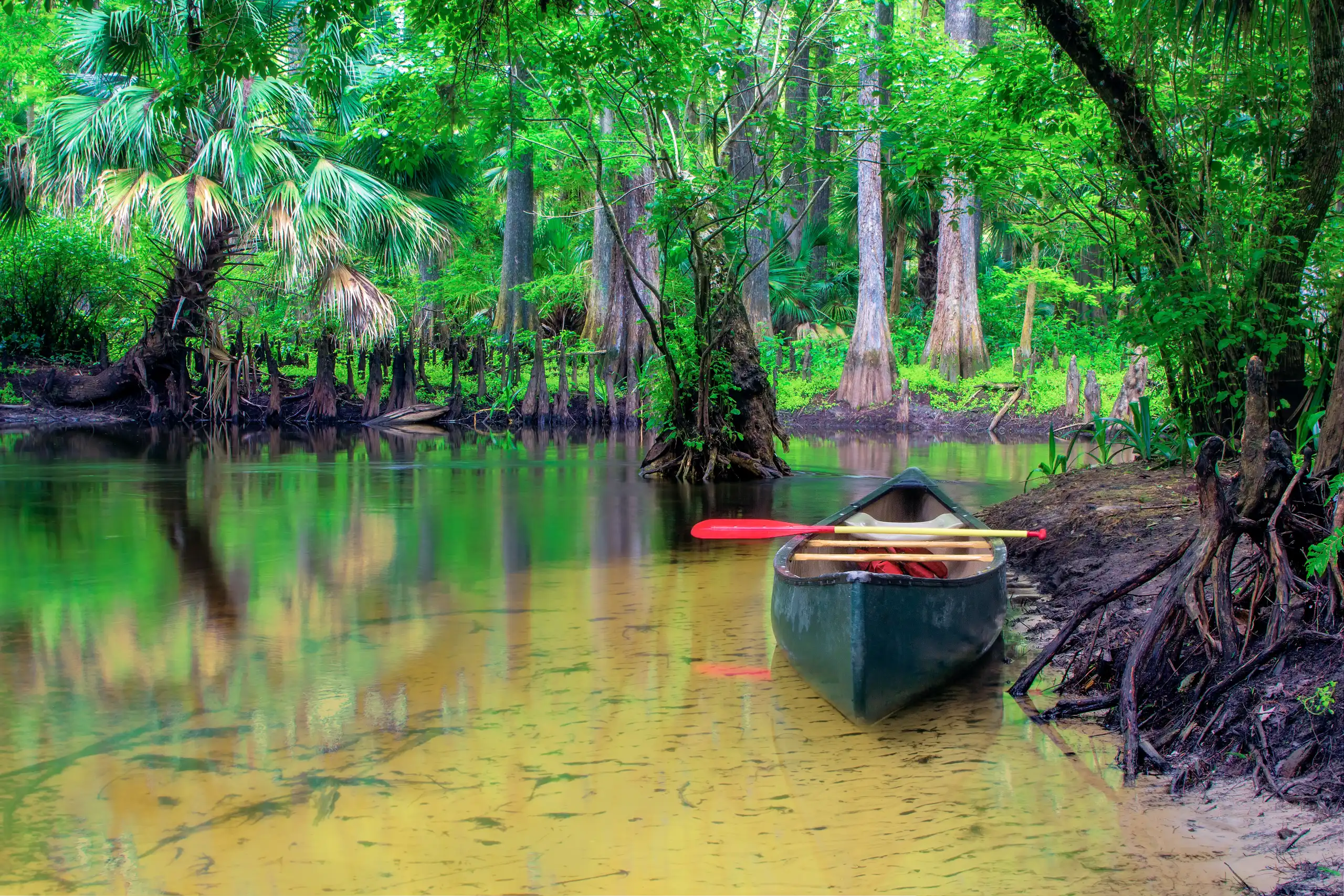
The bright coastal water gives way to freshwater creeks, cypress trees, shaded riverbanks, mangroves, wildlife, and stretches of Florida that can feel much farther from the coast than they actually are.
It is one of the things Amy and I appreciate most about living here.
Within the same river system, you can experience a cypress-covered landscape that feels like old Florida and eventually reach the Jupiter Inlet and Atlantic Ocean.
That contrast is remarkable.
A River That Changes as It Travels
The Loxahatchee is not one uniform river.
That is part of what makes it so interesting.
The broader watershed includes both freshwater and saltwater habitats, and the river changes noticeably as it moves toward the coast.
In the upper reaches, the landscape can feel quiet and almost prehistoric.
Freshwater creeks wind beneath cypress trees.
The surroundings feel natural, shaded, and far removed from the coastal side of Jupiter that many people know best.
As the river continues east, freshwater gradually mixes with saltwater entering through the Jupiter Inlet.
The environment begins to change.
Cypress gives way to mangroves.
The river widens.
Tidal influence becomes more noticeable.
Eventually, the Loxahatchee reaches the Jupiter Inlet and the Atlantic Ocean.
It is one connected river system, but along the way it can feel like several very different versions of Florida.
Florida’s First Wild and Scenic River
One of the most important things about the Loxahatchee is also something many people who live here may not realize.
The Loxahatchee became Florida’s first federally designated Wild and Scenic River.
The federally protected section follows part of the Northwest Fork, recognizing the river’s natural, recreational, cultural, and historic importance.
That is significant anywhere.
In South Florida, where so much of the surrounding landscape has changed over time, it feels particularly special.
The river passes through cypress swamps, freshwater wetlands, hardwood hammocks, mangroves, and estuarine environments before ultimately connecting with the inlet and ocean.
It is a very different picture of Jupiter than beaches, condominiums, docks, and waterfront restaurants.
And yet, it is all part of the same place.
Riverbend Park Feels Like Another Florida
One of the easiest places to experience this side of Jupiter is Riverbend Park.
Drive west on Indiantown Road and the landscape begins to change.
Then you enter the park, and it changes again.
Riverbend gives you a glimpse of a very different Florida, with cypress swamps, pine flatwoods, oak hammocks, wetlands, freshwater lakes, and waterways connected to the Loxahatchee River.
Amy and I have kayaked there ourselves, and one thing that surprised us was how clear the water could be.
When you are sitting low in a kayak, you start noticing things you would never see from a road.
Turtles.
Fish moving beneath the surface.
All kinds of birds.
And then there is the vegetation.
Paddling beneath the trees and through those narrow stretches of water is completely different from what many people picture when they think about Jupiter.
If you are not from this area, the scenery can be especially surprising.
It feels quiet.
Shaded.
Natural.
At moments, almost untouched.
It does not look like the Jupiter most visitors know.
And that is exactly what makes it memorable.
The River Has a Long Memory
The Loxahatchee is important not only for its natural beauty.
It is also deeply connected to the area’s history.
Adjacent to Riverbend Park, Loxahatchee River Battlefield Park preserves the site of two battles fought during the Second Seminole War in January 1838: Powell’s Battle on January 15 and Jesup’s Battle on January 24.
The battlefield is now recognized on the National Register of Historic Places.
Long before modern Jupiter developed around roads, neighborhoods, marinas, and shopping areas, Indigenous people had lived in and cared for this landscape for thousands of years. Later, pioneer families also settled along the Loxahatchee and became part of the early Jupiter community.
Farther along the river, Jonathan Dickinson State Park preserves another chapter of the area’s history.
Trapper Nelson, later known as the “Wildman of the Loxahatchee,” came to the upper river in the early 1930s. He lived off the land, trapped and traded furs, and eventually turned his homestead into a well-known local attraction.
You do not need to turn a day on the river into a history lesson to appreciate any of this.
Sometimes it is enough to realize that the quiet water in front of you has been part of this area’s human story for a long time.
From Cypress to Mangroves
One of the most fascinating things about the Loxahatchee is how visibly the environment changes.
In freshwater sections, bald cypress trees help define the landscape.
Closer to the coast, as saltwater influence increases, mangroves become more prominent.
That transition tells part of the river’s story.
Freshwater.
Brackish water.
Saltwater.
All within one connected system.
The river has changed ecologically over time, including saltwater intrusion that damaged cypress habitat in some lower sections. Restoration efforts have improved freshwater flows, and bald cypress has been reintroduced in areas where natural habitat was affected.
Most people don’t need to know all that science to appreciate the river.
What you notice first is how dramatically the scenery changes.
A Different Kind of Waterfront Lifestyle
When people hear “waterfront living in Jupiter,” they often picture docks, boats, the Intracoastal, or the ocean.
But the Loxahatchee reminds you that waterfront living here can mean very different things.
Some parts of Jupiter feel distinctly coastal.
Some revolve around boating and access to the inlet.
Other areas along the river can feel quieter, greener, and more sheltered.
The vegetation changes.
The views change.
The water changes.
Even the atmosphere changes.
Relocation buyers don’t always understand that until they spend time here.
Two properties can both be described as “waterfront” and provide completely different experiences.
One may face open water with passing boats.
Another may sit along a quieter stretch of river surrounded by mature vegetation.
Neither is necessarily better.
They are simply different lifestyles.
Understanding those differences is part of understanding Jupiter.
You Do Not Need a Boat to Experience It
Another thing we like about the Loxahatchee is that you do not need to own waterfront property or a boat to experience this side of the area.
Riverbend Park lets people walk, bike, canoe, or kayak through the landscape.
For us, kayaking was one of the best ways to appreciate it because the pace forces you to notice what is around you.
The trees.
The birds.
The turtles.
The fish.
The reflections on the water.
The quiet.
You feel farther away from everything than you actually are.
It is the kind of experience that can make you stop and think:
How is this Jupiter?
And that is exactly the point.
One River, Two Completely Different Images of Jupiter
Picture the upper river, and you may see dark water beneath cypress trees.
Quiet.
Shaded.
Natural.
Follow the river toward the coast and the picture changes.
Mangroves.
Wider water.
Homes.
Boats.
The Intracoastal.
The Jupiter Inlet.
Then the Atlantic.
That progression is one of the reasons the Loxahatchee feels like such an important part of Jupiter’s identity.
It connects an old Florida landscape with the coastal Jupiter most people recognize today.
Why This Matters to People Moving Here
Most relocation buyers arrive knowing about the beach.
They know about boating.
They may know about golf.
They probably know the lighthouse.
What they often do not realize is how much variety exists within a relatively small area.
Jupiter can feel coastal and polished near the inlet.
Quiet and residential a few miles away.
Rural farther west.
And remarkably natural along parts of the Loxahatchee.
That diversity is part of the appeal.
It also means choosing where to live here isn’t just about a town name or ZIP code.
It is about understanding what kind of surroundings you want to experience every day.
Final Thought
Most people first fall in love with Jupiter because of the blue water.
That makes sense.
It is hard not to.
But the Loxahatchee River tells another side of the story.
Cypress trees.
Freshwater creeks.
Mangroves.
Wildlife.
Old Florida.
History.
And eventually, the Jupiter Inlet and Atlantic Ocean.
For Amy and me, kayaking at Riverbend was one of those reminders that this area can still surprise you, even after years of living here.
It reminded us that Jupiter’s relationship with water goes much deeper than the coastline.
Sometimes the most interesting version of a place is the one you did not expect to find.
And the Loxahatchee River may be one of Jupiter’s best examples.
𝐉𝐨𝐡𝐧 𝐚𝐧𝐝 𝐀𝐦𝐲 𝐒𝐢𝐦𝐦𝐨𝐧𝐝𝐬, 𝐓𝐡𝐞 𝐒𝐢𝐦𝐦𝐨𝐧𝐝𝐬 𝐓𝐞𝐚𝐦
Local Jupiter real estate advisors with 45+ years of combined experience
Social Cookies
Social Cookies are used to enable you to share pages and content you find interesting throughout the website through third-party social networking or other websites (including, potentially for advertising purposes related to social networking).