

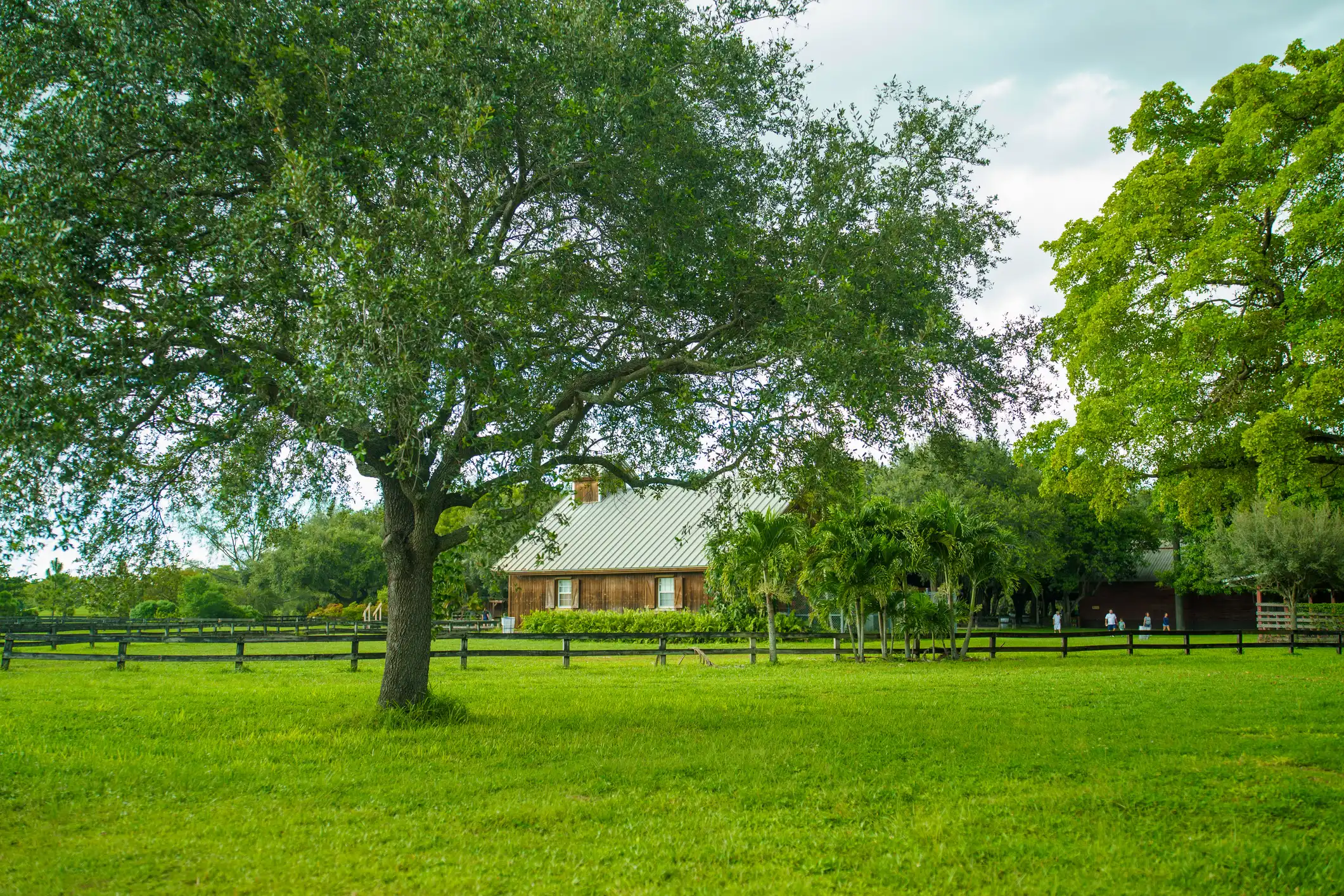
When people picture an equestrian property, the barn is often the first thing that comes to mind.
A beautiful barn certainly has its appeal. But for many buyers, especially those who are new to horse ownership or want one or two horses at home, a great equestrian property need not be elaborate.
It needs to work.
The right property may be a large equestrian estate built around training and competition. It may also be a quieter acreage home in Jupiter Farms, Caloosa, Loxahatchee, or another part of Palm Beach County where there is enough room for horses, privacy, and a simpler daily routine.
The best equestrian property is not necessarily the one with the biggest barn or the most acreage.
It is the one that fits your horses, your experience, and the way you actually want to live.
Start With How You Plan to Use the Property
Before counting stalls or measuring paddocks, think about what you want horse ownership at home to look like.
Are you an experienced rider with several horses?
Will you be training or competing regularly?
Do you want an arena?
Or are you imagining something much simpler: one or two horses, a small barn or shelter, turnout space, and the ability to walk outside in the morning and see your horses from the house?
There is a big difference between purchasing a professional equestrian facility and purchasing a home where horses can comfortably be part of everyday life.
For buyers just beginning to explore the lifestyle, simpler may actually be better.
You can always decide later that you want more.
The Land Matters More Than the Barn
A barn can be renovated, expanded, or sometimes added later.
The land is much harder to change.
That is why we encourage buyers to pay attention to the entire property rather than being immediately won over by an impressive barn.
Walk the property.
Notice where the house sits in relation to the horse areas. Look at the fencing. Think about how horses would move between the barn and turnout areas. Consider where a trailer would enter and whether there is comfortable room to maneuver.
Most importantly, pay attention to how the land handles water.
South Florida gets heavy rain, and drainage can make a noticeable difference in how usable an equestrian property feels year-round.
You do not need to become an expert in drainage engineering.
You want to know whether the property continues to function comfortably after a typical Florida downpour.
A Good Layout Makes Everyday Life Easier
One of the easiest things to overlook during a showing is how much the layout of an equestrian property affects the daily routine.
Imagine actually living there.
Can you see the horses easily from the house?
Is the barn convenient to reach?
Can feed, hay, bedding, and equipment be delivered without turning the entire yard into a loading area?
Can a veterinarian or farrier get where they need to go?
If you own a trailer, is there enough room to enter, park, and turn around comfortably?
None of these things are glamorous, but they are the details owners notice every day.
A modest property with a thoughtful layout can be far more enjoyable than a larger property where everything feels inconvenient.
You May Not Need the Barn You Think You Need
This is particularly important for buyers considering the equestrian lifestyle for the first time.
It is easy to tour a property with an eight-stall barn, tack room, wash stalls, arena, feed room, and multiple paddocks and think, “This is what an equestrian property is supposed to look like.”
But do you need all of it?
If you plan to keep one or two horses at home, your priorities may be much simpler.
A safe, comfortable shelter.
Good fencing.
Adequate turnout.
Convenient access to water.
Storage for feed and equipment.
Enough room to comfortably care for the horses.
For some owners, that is exactly the lifestyle they want.
Starting small does not make the equestrian lifestyle any less authentic.
In fact, buyers who are new to keeping horses at home may appreciate learning the routine before taking on a larger property with more maintenance, more land, and more infrastructure.
Think About the Horses First
It sounds obvious, but a beautiful property still has to work for the animals living there.
Look at the turnout areas.
Consider shade, fencing, water access, and how horses will move around the property.
Think about the barn’s ventilation and whether the stalls feel comfortable rather than simply attractive.
Florida’s climate also deserves attention. Heat, humidity, heavy rain, and hurricane season are all part of horse ownership here.
Again, the goal is not to make the buying process overly technical.
It is simply to picture the property through the horse’s eyes as well as your own.
Room to Grow Can Be More Valuable Than Having Everything Today
Some buyers know exactly what they want from the beginning.
Others do not.
You might start with one horse and eventually add another.
You may initially board with a trainer and later decide to keep horses at home.
You may discover that you would love a riding area, an additional paddock, or more storage once you have lived on the property for a while.
That is why flexibility can be valuable.
A property does not necessarily need every improvement on day one, but having space and a layout that leave reasonable options for the future can make a difference.
Of course, buyers should confirm local zoning, permitting, community rules, and whether the improvements they envision are actually allowed before assuming something can be added.
That is particularly important because equestrian regulations can vary from one area to another throughout Palm Beach County.
Location Still Matters
The property cannot be separated from the lifestyle surrounding it.
A serious competitor may place a high value on being closer to Wellington’s training and competition venues.
Someone looking for a quieter horse-at-home lifestyle may prefer acreage farther north, where horses can be combined with the broader Jupiter or Palm Beach Gardens lifestyle.
That could mean living in Jupiter Farms, Caloosa, Palm Beach Country Estates, Loxahatchee, or another acreage community that offers more space without making equestrian activities the center of every day.
The property itself may be wonderful in any of these locations.
The question is whether you will enjoy everything that happens outside the property line too.
Don’t Forget the Human Side of the Property
Equestrian buyers understandably spend a lot of time thinking about their horses.
But you still have to like the house.
You still have to enjoy the neighborhood.
The drive to work, school, restaurants, the beach, family, and everyday errands still matter.
If other household members are not riders, their priorities matter too.
This is especially important for families moving to Palm Beach County because of one person’s equestrian interests. The perfect horse property may not be the perfect family property if everyone else feels disconnected from the places they enjoy.
A successful purchase usually balances both sides.
What Should a First-Time Equestrian Buyer Look For?
If you are beginning to consider keeping horses at home, we would keep the first search surprisingly simple.
Look for enough usable land for your needs.
Make sure horses are permitted.
Pay attention to drainage and fencing.
Look for a practical place for shelter, feed, equipment, and water.
Think about trailer and service access.
Consider how much maintenance you actually want.
And perhaps most importantly, choose a property that still feels like a home you would love even if the barn were not there.
You do not need to create your forever equestrian setup immediately.
Sometimes the best way into the lifestyle is simply finding a property that gives you enough space to begin.
Frequently Asked Questions
Do I need a large property to keep a horse in Palm Beach County?
Not necessarily. The amount of land and facilities you need depends on the number of horses, how the property will be used, and local rules. Buyers should verify zoning, community restrictions, and permitted horse use for the individual property before purchasing.
Do I need a riding arena on my property?
No. Some owners consider an arena essential, while others primarily trail ride, work with a trainer elsewhere, or keep horses at home without maintaining a private arena.
Is an existing barn always better?
Not necessarily. An existing barn can be valuable if it is well located and suited to your needs. Still, buyers should evaluate its condition and functionality rather than assuming that any barn adds value to their lifestyle.
What is especially important when buying equestrian property in Florida?
Drainage, shade, water access, fencing, ventilation, storm preparation, and overall property layout are important considerations in South Florida’s climate.
Can I start small with an equestrian property?
Absolutely. Not every buyer needs a large farm or competition facility. For someone keeping one or two horses, a simpler property with safe fencing, usable turnout, shelter, water, and practical storage may be enough to enjoy the lifestyle.
𝐉𝐨𝐡𝐧 𝐚𝐧𝐝 𝐀𝐦𝐲 𝐒𝐢𝐦𝐦𝐨𝐧𝐝𝐬, 𝐓𝐡𝐞 𝐒𝐢𝐦𝐦𝐨𝐧𝐝𝐬 𝐓𝐞𝐚𝐦
Local Jupiter real estate advisors with 45+ years of combined experience
Social Cookies
Social Cookies are used to enable you to share pages and content you find interesting throughout the website through third-party social networking or other websites (including, potentially for advertising purposes related to social networking).